End of the blue glow: BepiColombo turns off solar electric propulsion for Mercury arrival
24/06/2026
2546 views
53 likes
At 15:24 CEST on 15 June 2026, a faint blue glow in space was switched off for the last time. After powering BepiColombo’s eight-year journey across the inner Solar System, the spacecraft’s solar electric propulsion (SEP) system completed its final thrust arc, marking the end of BepiColombo’s long cruise phase and the beginning of its arrival at Mercury.
Since its launch in October 2018, the ESA/JAXA BepiColombo mission to the Solar System’s innermost planet has been on an 8 year-long cruise phase powered by solar electric propulsion (SEP).
Located in BepiColombo’s Mercury Transfer Module (MTM), the four QinetiQ T6 solar electric propulsion thrusters use electricity generated by the spacecraft’s solar arrays to ionise xenon gas.
Unlike traditional chemical propulsion, this system uses solar energy to turn xenon gas into an electrically charged stream (plasma), which is then accelerated and fired out at very high speeds. Requiring far less propellant and able to adjust its thrust based on the available solar power, SEP is one of the most efficient and flexible propulsion systems flown to date, allowing BepiColombo to complete one of the most complex interplanetary journeys ever attempted.
The end of a chapter
After a long, challenging cruise phase with nine planetary flybys (one by Earth, two by Venus and six by Mercury), BepiColombo finally closed this chapter last Monday by permanently switching off its SEP thrusters. The commands were sent from Earth well in advance to turn off the thrusters at exactly the right moment during the spacecraft’s last thrust arc.
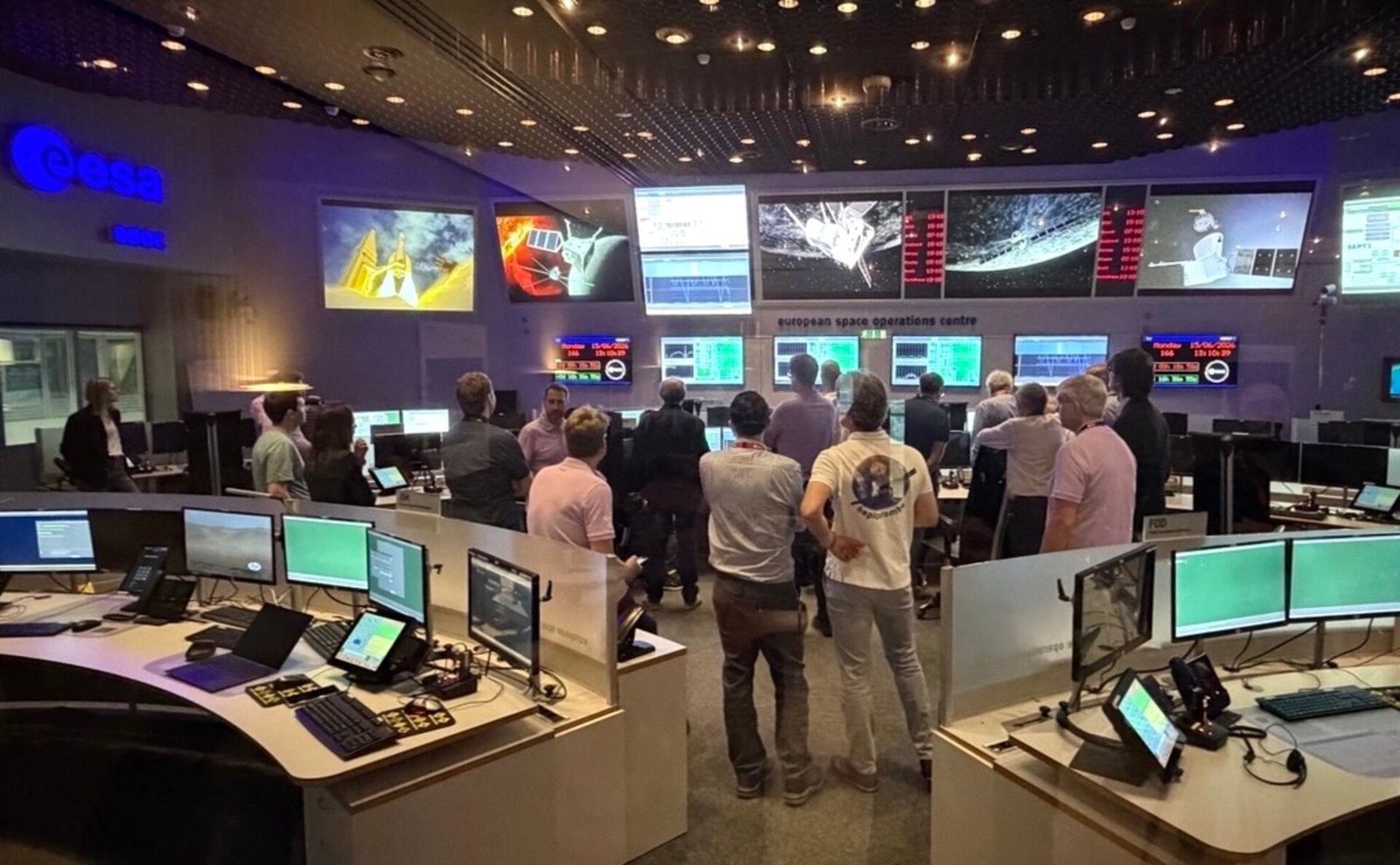
On the morning before the scheduled afternoon SEP system shutdown, Neil Wallace – the lead SEP thruster engineer – met with the mission team and industry partners at ESA’s European Space Operations Centre (ESOC) in Darmstadt, Germany. Together, they reviewed the lessons learned from BepiColombo’s SEP – a key step towards the implementation of this system in future space missions.
The beginning of arrival
Without any other source of propulsion, BepiColombo will follow a “ballistic” or free-falling trajectory as it initiates its first key arrival manoeuvre – MTM separation – on 3 September 2026.
After the MTM is ejected, the remaining spacecraft composite (MPO-Mio-MOSIF) will continue its planetary approach using MPO’s chemical propulsion system. This system will adjust the spacecraft’s trajectory ahead of the critical Mercury orbit insertion manoeuvre on 21 November, then guide it into Mio’s deployment orbit in early December before finally lowering MPO into its science orbit by March 2027.
Stay tuned here for more BepiColombo updates as we bring one of Europe’s most ambitious planetary missions to its final destination – Mercury.
24/06/2026
2546 views
53 likes
At 15:24 CEST on 15 June 2026, a faint blue glow in space was switched off for the last time. After powering BepiColombo’s eight-year journey across the inner Solar System, the spacecraft’s solar electric propulsion (SEP) system completed its final thrust arc, marking the end of BepiColombo’s long cruise phase and the beginning of its arrival at Mercury.
Since its launch in October 2018, the ESA/JAXA BepiColombo mission to the Solar System’s innermost planet has been on an 8 year-long cruise phase powered by solar electric propulsion (SEP).
Located in BepiColombo’s Mercury Transfer Module (MTM), the four QinetiQ T6 solar electric propulsion thrusters use electricity generated by the spacecraft’s solar arrays to ionise xenon gas.
Unlike traditional chemical propulsion, this system uses solar energy to turn xenon gas into an electrically charged stream (plasma), which is then accelerated and fired out at very high speeds. Requiring far less propellant and able to adjust its thrust based on the available solar power, SEP is one of the most efficient and flexible propulsion systems flown to date, allowing BepiColombo to complete one of the most complex interplanetary journeys ever attempted.
The end of a chapter
After a long, challenging cruise phase with nine planetary flybys (one by Earth, two by Venus and six by Mercury), BepiColombo finally closed this chapter last Monday by permanently switching off its SEP thrusters. The commands were sent from Earth well in advance to turn off the thrusters at exactly the right moment during the spacecraft’s last thrust arc.
On the morning before the scheduled afternoon SEP system shutdown, Neil Wallace – the lead SEP thruster engineer – met with the mission team and industry partners at ESA’s European Space Operations Centre (ESOC) in Darmstadt, Germany. Together, they reviewed the lessons learned from BepiColombo’s SEP – a key step towards the implementation of this system in future space missions.
The beginning of arrival
Without any other source of propulsion, BepiColombo will follow a “ballistic” or free-falling trajectory as it initiates its first key arrival manoeuvre – MTM separation – on 3 September 2026.
After the MTM is ejected, the remaining spacecraft composite (MPO-Mio-MOSIF) will continue its planetary approach using MPO’s chemical propulsion system. This system will adjust the spacecraft’s trajectory ahead of the critical Mercury orbit insertion manoeuvre on 21 November, then guide it into Mio’s deployment orbit in early December before finally lowering MPO into its science orbit by March 2027.
Stay tuned here for more BepiColombo updates as we bring one of Europe’s most ambitious planetary missions to its final destination – Mercury.