Before astronauts arrive, these hopping drones will scout the Moon
For decades, lunar exploration was defined by astronauts, rovers, and orbiters. But as NASA pushes deeper into the Artemis era, a new class of robotic explorer is quietly emerging, one that could significantly change how humanity navigates the Moon: small autonomous hopping drones.
Called MoonFall, the concept is being developed by NASA’s Jet Propulsion Laboratory in Pasadena, California, with an architecture designed for the Moon’s south polar region.
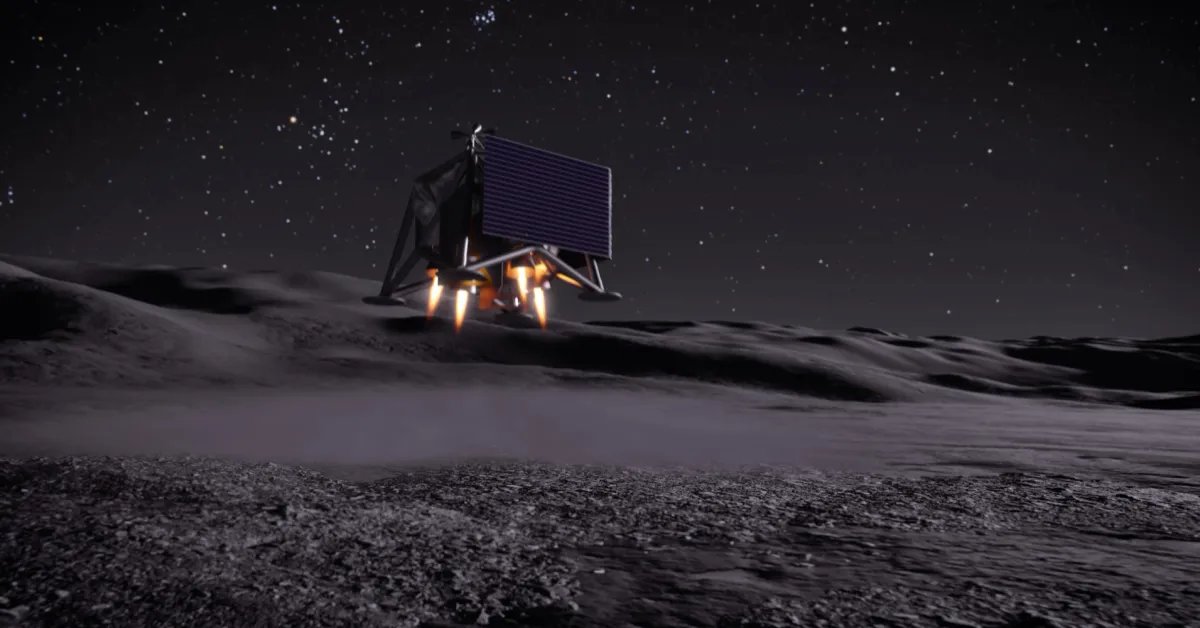
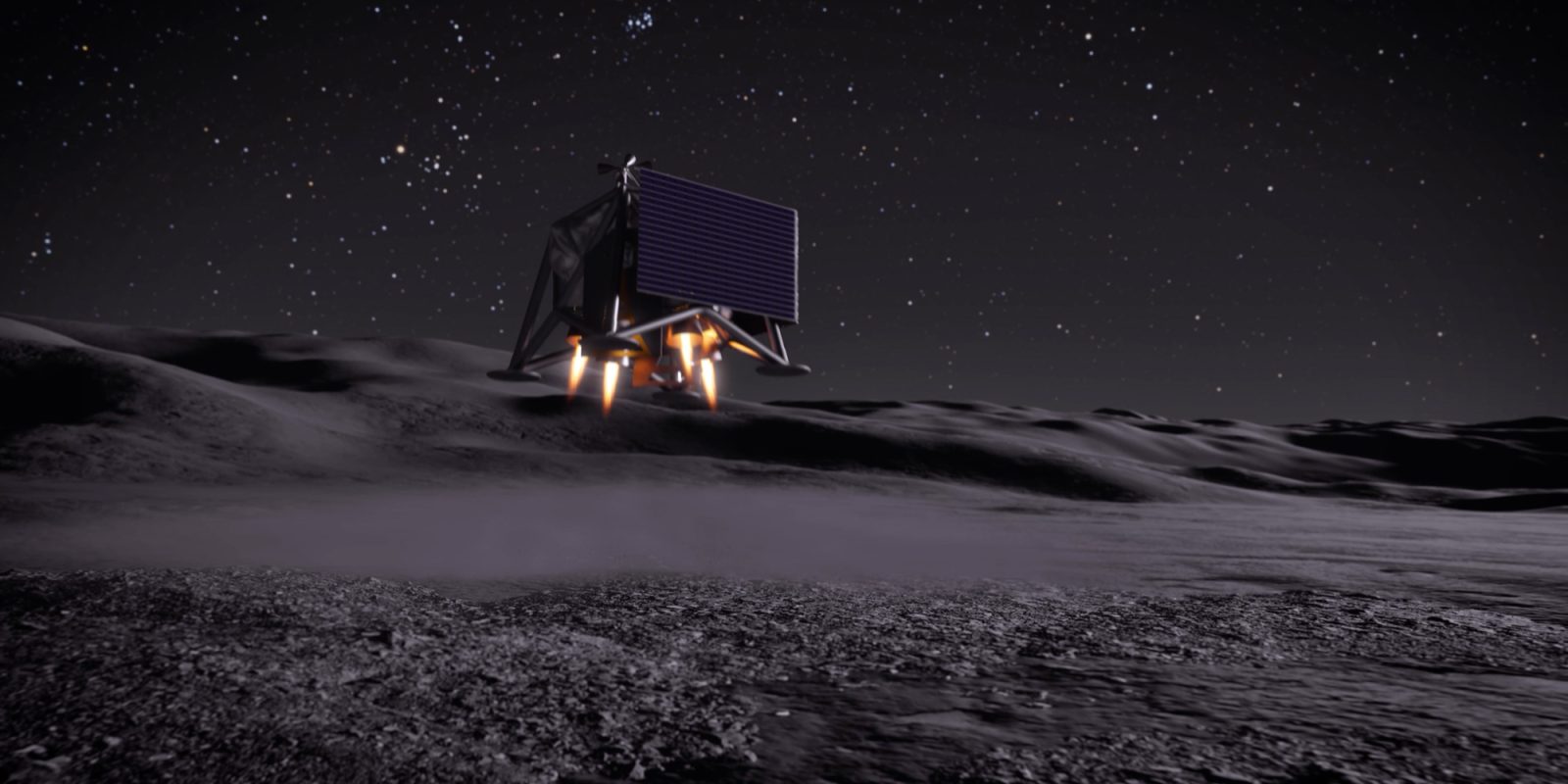
Unlike the Ingenuity helicopter on Mars, these vehicles are not aircraft in the traditional sense. The Moon has virtually no atmosphere, making aerodynamic flight impossible. Instead, MoonFall’s robotic scouts are designed to move using controlled rocket-powered hops, leaping across some of the harshest terrain in the solar system.
And that terrain is unforgiving: The lunar south pole contains permanently shadowed craters, steep ridgelines, deep cold traps, and lighting conditions so extreme that sunlight can sit low on the horizon for weeks at a time. Temperatures inside some shadowed regions plunge below minus 280 degrees Fahrenheit. These are places where conventional wheeled rovers could become trapped and where astronauts themselves may eventually face major operational limits.
That is precisely why NASA appears increasingly interested in robotic mobility systems that can jump rather than drive.
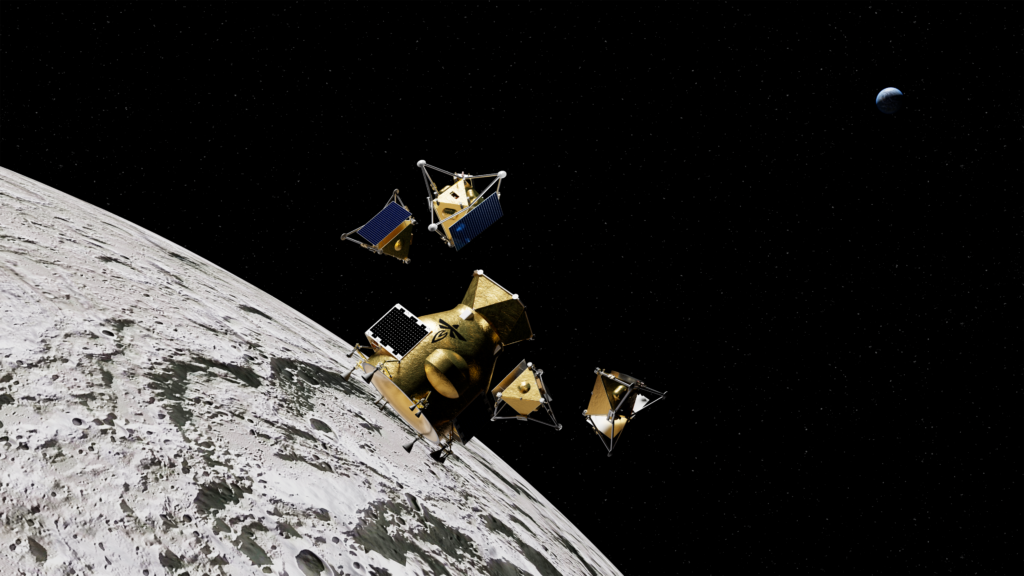
Firefly Aerospace, contracted to deliver the drones to the Moon, will carry the four autonomous hopping scouts aboard its Elytra Dark spacecraft. According to publicly released information from JPL and Firefly, the plan calls for Elytra to enter lunar orbit before performing a braking maneuver to deploy the drones about 30 miles above the Moon’s south pole. From there, the robotic scouts would then descend toward the surface and begin a series of carefully controlled hops between craters and elevated terrain.
Their objectives are ambitious. The drones are expected to scout landing zones, examine difficult terrain, search for ice-rich regions, map safe traverse routes, and survey locations that could someday support long-duration human operations. NASA has also suggested these systems may help define the future perimeter of lunar base infrastructure, positioning MoonFall as both a science mission and an early step in operational site planning.
Many observers will likely view MoonFall as a spiritual successor to Ingenuity. NASA and JPL gained enormous experience from the Mars helicopter program, particularly in autonomous navigation, terrain-relative positioning, lightweight robotics, and independent decision-making. MoonFall appears to adapt many of those lessons for an entirely different environment: one with vacuum conditions, abrasive lunar dust, ballistic trajectories, and propulsive landings.
Announced in early 2026, the mission concept already appears to be progressing through prototype development, mobility testing, and autonomy validation with a tentative launch target no earlier than 2028. For NASA standards, that is a relatively rapid progression, suggesting the agency may be leveraging significant existing technology heritage from prior robotic programs.
And the implications could extend far beyond a single mission. As Artemis evolves from symbolic return missions into a sustained lunar architecture, systems like MoonFall may eventually become foundational. Before astronauts build habitats, deploy power grids, or establish permanent operations, robotic scouts could first map hazards, verify terrain stability, identify resources, and help prepare the Moon for long-duration human presence.
If successful, missions like MoonFall may signal a broader shift in exploration philosophy. The next era of lunar discovery may not begin with giant machines or footprints in the dust. It may begin with small autonomous robots silently hopping across the rim of a frozen crater, scouting the frontier ahead of humanity itself.


FTC: We use income earning auto affiliate links. More.
For decades, lunar exploration was defined by astronauts, rovers, and orbiters. But as NASA pushes deeper into the Artemis era, a new class of robotic explorer is quietly emerging, one that could significantly change how humanity navigates the Moon: small autonomous hopping drones.
Called MoonFall, the concept is being developed by NASA’s Jet Propulsion Laboratory in Pasadena, California, with an architecture designed for the Moon’s south polar region.
Unlike the Ingenuity helicopter on Mars, these vehicles are not aircraft in the traditional sense. The Moon has virtually no atmosphere, making aerodynamic flight impossible. Instead, MoonFall’s robotic scouts are designed to move using controlled rocket-powered hops, leaping across some of the harshest terrain in the solar system.
And that terrain is unforgiving: The lunar south pole contains permanently shadowed craters, steep ridgelines, deep cold traps, and lighting conditions so extreme that sunlight can sit low on the horizon for weeks at a time. Temperatures inside some shadowed regions plunge below minus 280 degrees Fahrenheit. These are places where conventional wheeled rovers could become trapped and where astronauts themselves may eventually face major operational limits.
That is precisely why NASA appears increasingly interested in robotic mobility systems that can jump rather than drive.
Firefly Aerospace, contracted to deliver the drones to the Moon, will carry the four autonomous hopping scouts aboard its Elytra Dark spacecraft. According to publicly released information from JPL and Firefly, the plan calls for Elytra to enter lunar orbit before performing a braking maneuver to deploy the drones about 30 miles above the Moon’s south pole. From there, the robotic scouts would then descend toward the surface and begin a series of carefully controlled hops between craters and elevated terrain.
Their objectives are ambitious. The drones are expected to scout landing zones, examine difficult terrain, search for ice-rich regions, map safe traverse routes, and survey locations that could someday support long-duration human operations. NASA has also suggested these systems may help define the future perimeter of lunar base infrastructure, positioning MoonFall as both a science mission and an early step in operational site planning.
Many observers will likely view MoonFall as a spiritual successor to Ingenuity. NASA and JPL gained enormous experience from the Mars helicopter program, particularly in autonomous navigation, terrain-relative positioning, lightweight robotics, and independent decision-making. MoonFall appears to adapt many of those lessons for an entirely different environment: one with vacuum conditions, abrasive lunar dust, ballistic trajectories, and propulsive landings.
Announced in early 2026, the mission concept already appears to be progressing through prototype development, mobility testing, and autonomy validation with a tentative launch target no earlier than 2028. For NASA standards, that is a relatively rapid progression, suggesting the agency may be leveraging significant existing technology heritage from prior robotic programs.
And the implications could extend far beyond a single mission. As Artemis evolves from symbolic return missions into a sustained lunar architecture, systems like MoonFall may eventually become foundational. Before astronauts build habitats, deploy power grids, or establish permanent operations, robotic scouts could first map hazards, verify terrain stability, identify resources, and help prepare the Moon for long-duration human presence.
If successful, missions like MoonFall may signal a broader shift in exploration philosophy. The next era of lunar discovery may not begin with giant machines or footprints in the dust. It may begin with small autonomous robots silently hopping across the rim of a frozen crater, scouting the frontier ahead of humanity itself.
FTC: We use income earning auto affiliate links. More.