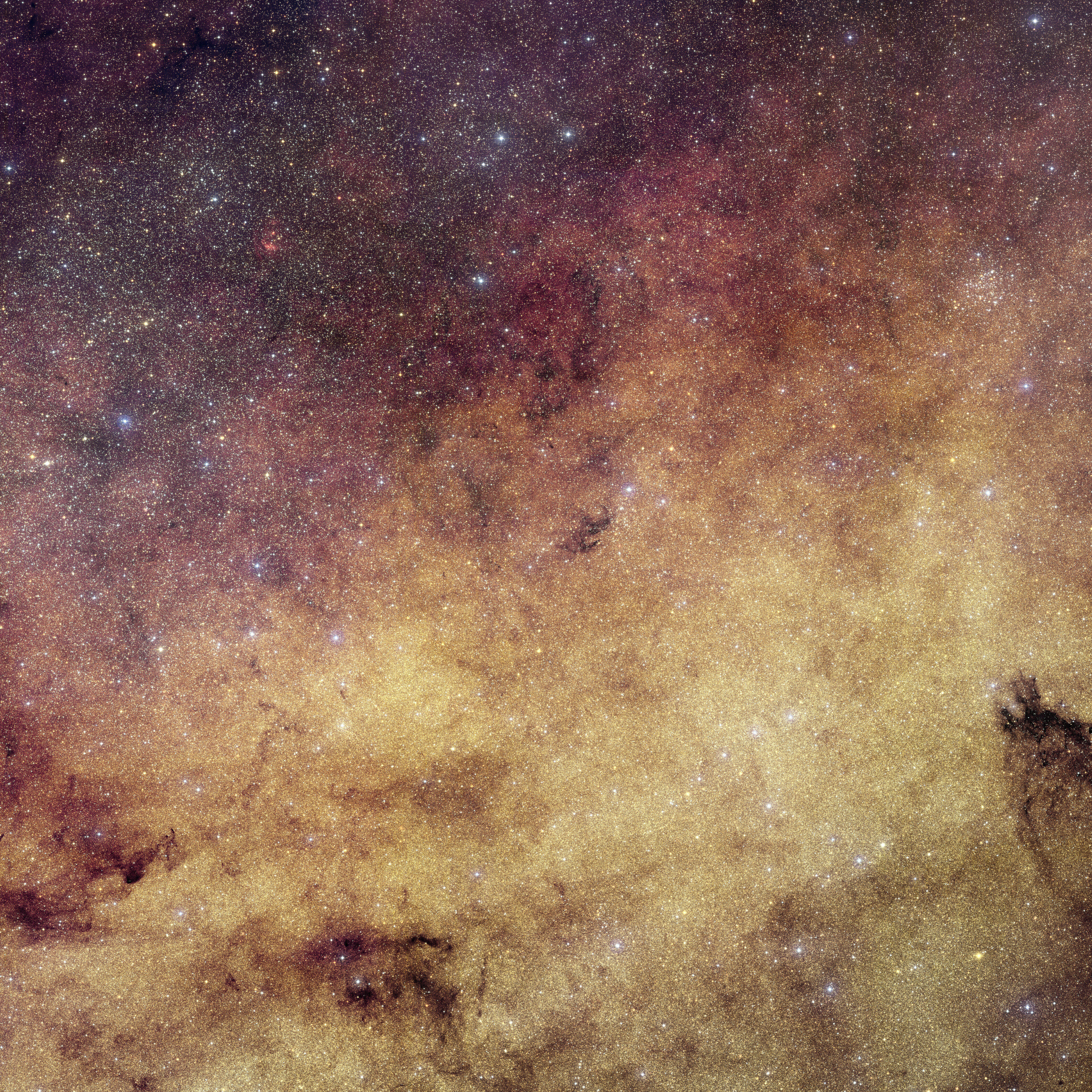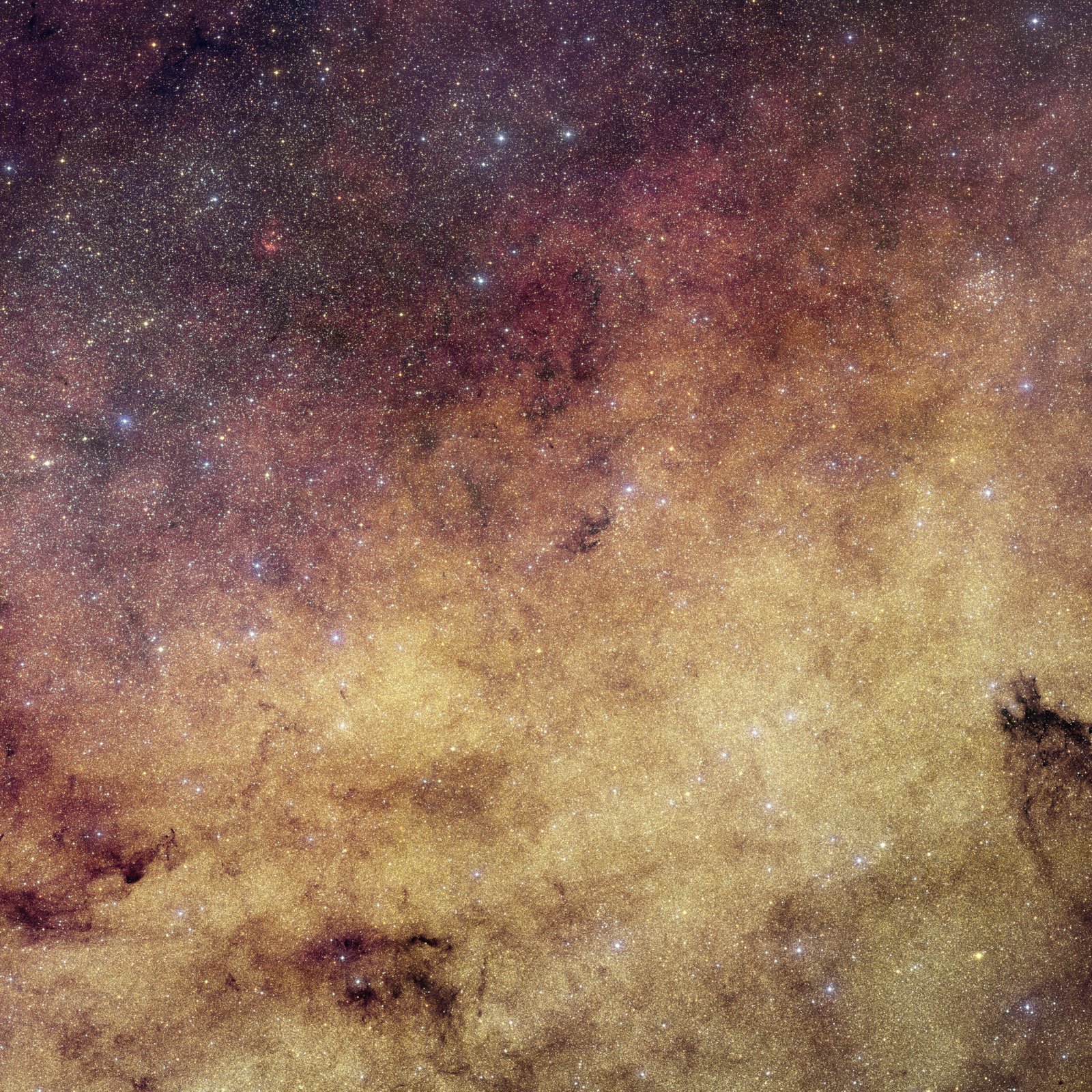
This image by ESA’s (European Space Agency) Euclid (with color added using ground-based images) provides an earlier snapshot of a region of our galaxy that NASA’s Nancy Grace Roman Space Telescope will repeatedly observe during the upcoming years.
Image Credit: ESA/Euclid/Euclid Consortium/NASA, CFHT, image processing by J.-C. Cuillandre and E. Bertin (CEA Paris-Saclay)
This image by ESA’s (European Space Agency) Euclid (with color added using ground-based images) provides an earlier snapshot of a region of our galaxy that NASA’s Nancy Grace Roman Space Telescope will repeatedly observe during the upcoming years.
Image Credit: ESA/Euclid/Euclid Consortium/NASA, CFHT, image processing by J.-C. Cuillandre and E. Bertin (CEA Paris-Saclay)
Given no path, a group of explorers makes their own way through a cave. While one scouts ahead, others survey the area and map their progress. The demanding exercise is part of the outdoor and technical lectures five ‘cavenauts’ are receiving from ESA’s CAVES training before they head off to explore independently a cave system…
On 26th June, NASA reported on progress with a new device designed to support refueling in space before deep-space missions. The goal is to enable spacecraft to connect with orbital propellant depots, effectively serving as fueling stations in orbit rather than only on Earth. This approach requires a cryocoupler that can safely transfer ultra-cold liquids…
Despite continual habitability headlines, the debate over whether Mars ever had or currently has life still rages. At every new planetary conference, someone presents data that often for a few weeks at least appears to change the calculus of Martian astrobiology. But for well over two decades now, one of the biggest mysteries remains —…
Even from a distance of several kilometres, the Artemis II rocket looked huge. Then, there was a moment that felt like an eternity, as around 2,600 metric tons of spacecraft lifted off. I was honoured to receive an invitation from the Canadian Space Agency to attend this historic launch at NASA’s Kennedy Space Center. I…
An extraordinary high-energy event detected deep in space is giving astronomers a rare opportunity to study some of the Universe’s most extreme phenomena. On July 2, 2025, the China-led Einstein Probe (EP) space telescope spotted an exceptionally bright X-ray source during a routine survey of the sky. The object’s brightness changed rapidly, making it immediately…
Editor’s note: This release was updated on June 30, 2026, to clarify the engineering development version for the PROMISE rover. NASA announced Tuesday the selection of three companies to land four new missions on the Moon in late 2028 as part of the agency’s Moon Base Program. Astrobotic, Firefly Aerospace, and Intuitive Machines will deliver…
https://www.nasa.gov/image-detail/euclid-s-view-of-our-galaxy-s-bulge/