Blue Origin accelerates LC-36 recovery via hybrid plan

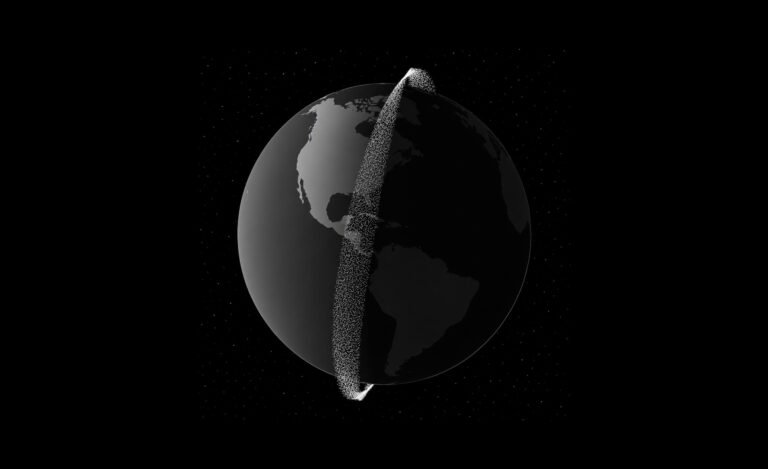
TAMPA, Fla. — Five-month-old startup Orbital has asked the Federal Communications Commission for permission to deploy up to 100,000 data center satellites, aiming to bring 10 gigawatts of computing power from space to meet rising artificial intelligence demand. The filings submitted June 24 add a few more details for a constellation the Los Angeles-based venture…
Two of our leaders have won a major award. The American Astronomical Society’s Division for Planetary Sciences has named Casey Dreier, our chief of space policy, and Jack Kiraly, our director of government relations, as recipients of the 2026 Harold Masursky Award for exceptional service to planetary science and space exploration. The recognition comes on…

The Royal Academy of Engineering has announced the winners of The Princess Royal Silver Medal, one of the Royal Academy of Engineering’s most prestigious individual awards. Professor Robert Thomson FREng, Professor of Photonics at Heriot-Watt University, is receiving one of three 2026 awards for inventing the integrated photonic lantern. This lantern is a tool for…
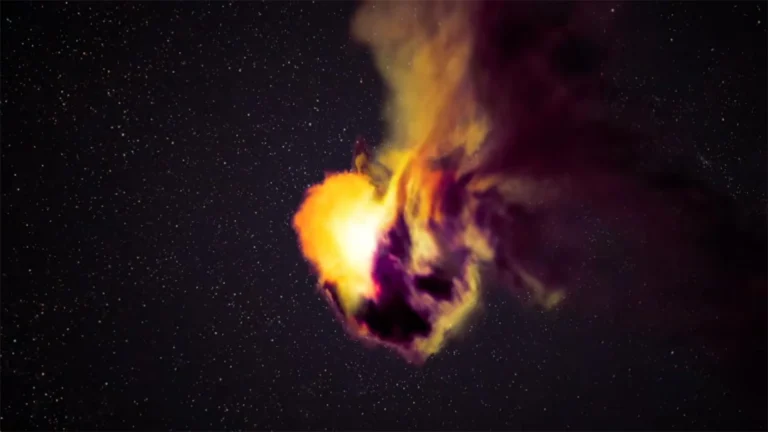
Astronomers have glimpsed the inner structure of a dying star in a rare kind of cosmic explosion called an “extremely stripped supernova.” In a paper published in Nature, Steve Schulze of Northwestern University in the United States and colleagues describe the supernova 2021yfj and a thick shell of gas surrounding it. Their findings support our…

NASA may be preparing to give one of its most recognizable rover designs an entirely new destination. During a recent Artemis update, the agency revealed that it is studying the possibility of sending PROMISE, a spare engineering model based on the Perseverance and Curiosity Mars rovers, to the Moon’s south pole. The concept could transform…

The focus of today’s ESA/Hubble Picture of the Month is an active spiral galaxy on a journey lasting hundreds of millions of years. The galaxy Messier 88 (M88), which is also known as NGC 4501, is located about 63 million light-years away in the constellation Coma Berenices (Berenice’s Hair). M88 is a member of the Virgo Cluster, a collection of more…