Earth Might Be Home to 20 Million Insect Species—More Than Three Times as Many as Previously Thought, a Study Suggests
Recent estimates have come to the consensus that our planet hosts roughly six million species. But new research reveals that those counts may be drastically underestimated
:focal(4801x2607:4802x2608)/https://tf-cmsv2-smithsonianmag-media.s3.amazonaws.com/filer_public/4e/82/4e82064b-f738-49d4-a886-f5b4ae7a8a70/insect-biodiversity.jpg)
Researchers came up with the new count by studying insect biodiversity in a conservation area in Costa Rica.
Alexey Protasov via Getty Images
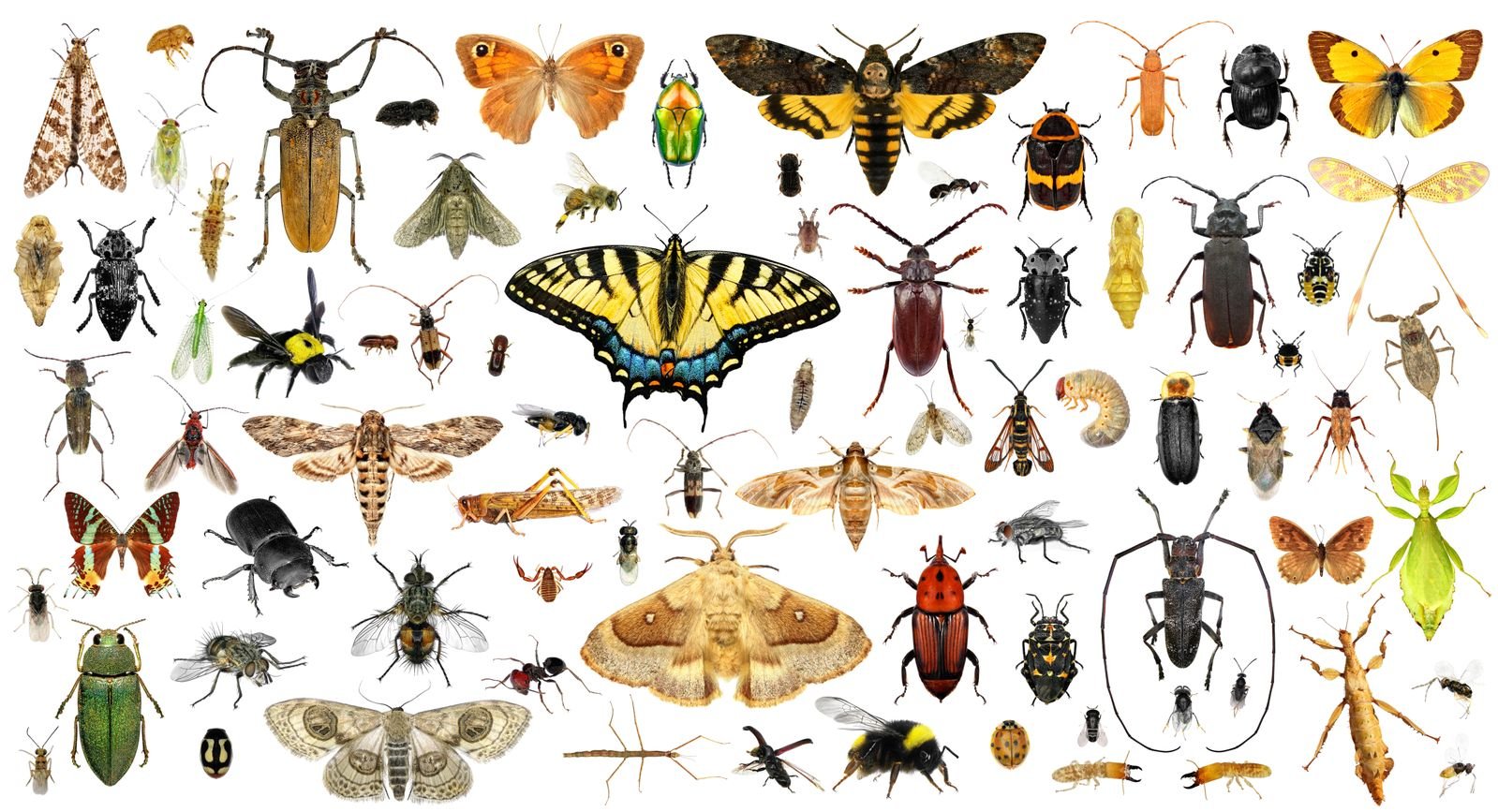
Insects are among the most numerous and diverse organisms on our planet. Practically no corner of Earth is free of the critters—even our southernmost continent has its own native insect, the Antarctic midge.
Entomologists have recently been working with an estimate of about six million insect species around the globe. But new research has upended that consensus. Earth actually hosts between 14 million and 20 million insect species, scientists report in a study published on June 29 in the journal Proceedings of the National Academy of Sciences. Only about one million species have been named and described, meaning up to 95 percent of the planet’s insect diversity might remain a mystery.
The new work “helps us understand how much we could be losing, and that we have to keep studying these insects to better protect them,” Laura Melissa Guzman, a study co-author and an entomologist at Cornell University, tells Science News’ Erin Garcia de Jesús.
Insect populations have been rapidly declining in recent years, a mostly human-caused phenomenon dubbed the “insect apocalypse.” For instance, a study published in 2014 that examined long-term monitoring of 452 invertebrate species—most of which are insects—found that their global population dropped by about 45 percent from 1970 to 2010. In 2017, researchers reported that flying insect biomass in protected areas of Germany plummeted by more than 75 percent from 1989 to 2016.
“If we don’t even know that a species of insect exists, and we don’t even have a name or anything for it, we could be losing a lot of species” without knowing it, Guzman tells Time’s Jeffrey Kluger.
So, she and her colleagues examined species within the Área de Conservación Guanacaste (ACG), a 418,000-acre UNESCO World Heritage Site in Costa Rica that sprawls across the country from the Pacific coast to the rainforests of the Caribbean basin. The ACG teems with an array of insect life, but the scientists focused on highly specialized parasitic wasps that belong to a group called Microgastrinae.
The vicious critters lay eggs inside living caterpillars, which are consumed from the inside by the wasp larvae after hatching. Since these wasps have been well studied and are heavily cataloged, the team used them as an ecological yardstick to estimate the missing insect species within the ACG, which could then be extrapolated to global populations.
The team studied data from creatures caught over several years in 15 Malaise traps—tent-like fabric nets that intercept insects midflight, funneling them upward into ethanol-filled bottles that instantly kill and preserve them. Among the more than 1.6 million captured critters, there were about 54,000 known insect species of all varieties.
“Remember that not every species gets caught in a Malaise trap, and they were only in three different parts of the forest,” Guzman tells Time. To account for overlooked wasps, the researchers used statistical methods that can balance uneven datasets. By comparing the fraction of species trapped in the nets to those flying under the radar, computer simulations projected that the ACG harbors about 2,400 Microgastrinae wasp species and 333,000 insect species overall.
Quick fact: How many individual insects roam the Earth?
Researchers estimate that about ten quintillion (that’s ten billion billion!) individual insects are alive on our planet at any given time.
The local baseline was scaled to a global level by comparing the conservation area’s roughly 1,500 tree species against the approximately 73,000 found across the planet, while incorporating global distribution data for mammals, amphibians and Saturniidae moths. The analysis yielded the staggering estimate of species worldwide.
“Even though it’s a crazy large number, I believe their approach gives us the lower bounds of what insect diversity is in the world,” says Brian Fisher, an entomologist at the California Academy of Sciences who was not involved in the study, to Science’s Annie Roth. “Whether it’s 14 million or 20 million, to me, is not the story here. The most important thing is that they’ve shown that our current estimate is a very low ball.”
Darko Cotoras, an entomologist at the Pontifical Catholic University of Chile who was also not involved in the study, tells Science that the new census underscores exactly how much biodiversity is currently teetering on the edge. With more than 40 percent of known insect species threatened with extinction, he highlights a grim reality: These vital organisms are vanishing far faster than scientists can discover them.
“The library is being burned before the books can be read,” Cotoras says.