July 2, 1967: The discovery of GRBs
Today in the history of astronomy, satellites Vela 3 and 4 make the first detection of gamma-ray bursts.
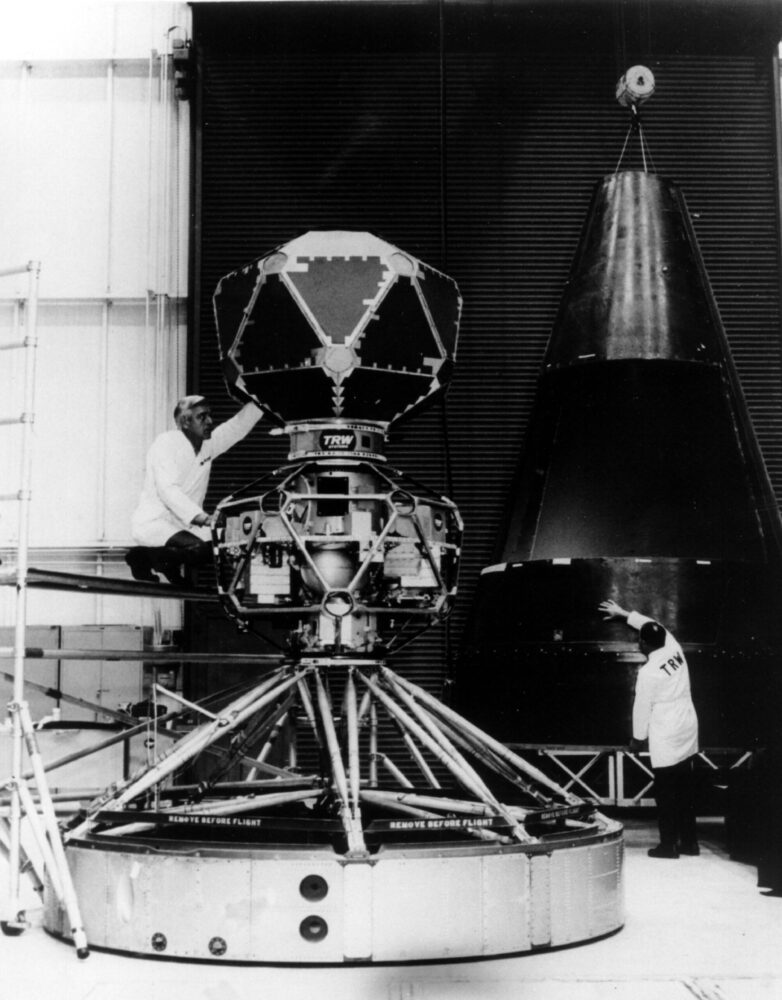
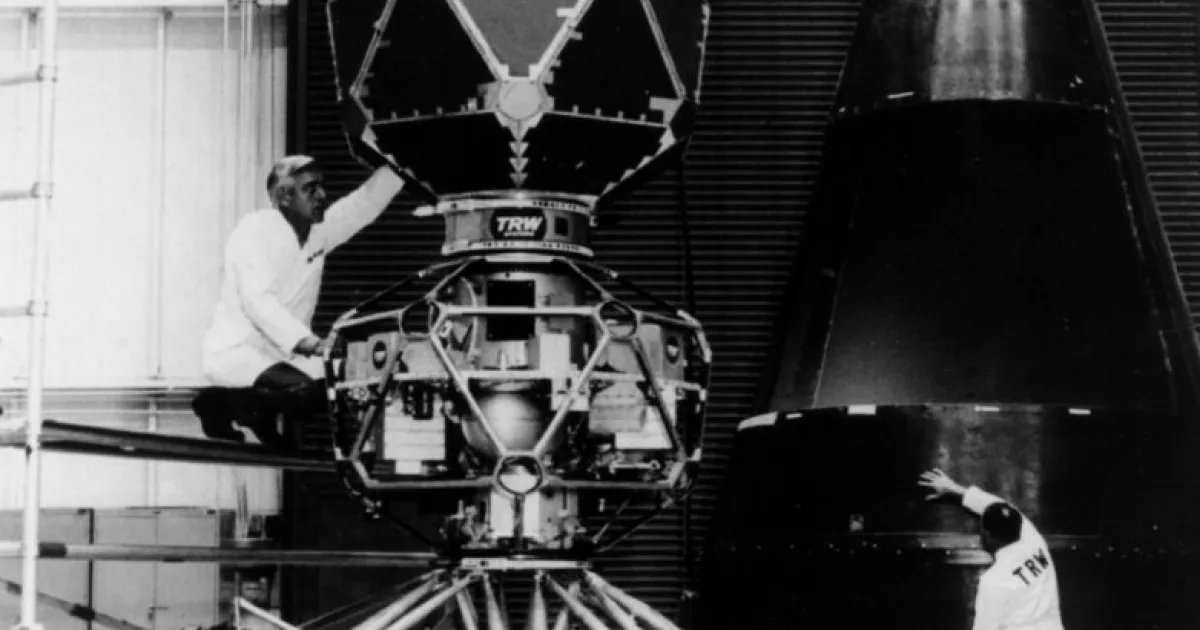
Vela 4 was actually two separate satellites made up of nine instruments. It launched in April 1967. Credit: energy.gov/Wikimedia
On July 2, 1967, the U.S.’s Vela 3 and 4 satellites, originally launched to monitor compliance with the Nuclear Test Ban Treaty by detecting weapons tests, accidentally detected fast and powerful flashes of high-energy photons, or gamma rays, from space. These events were later identified as gamma-ray bursts (GRBs) in a 1973 paper by Los Alamos scientists, led by Ray Klebesadel.
The Vela observations were the first detection of these phenomena, and at the time, their origin was debated – were they from within our solar system? Outside our galaxy? Eventually understanding evolved, particularly after the 1996 launch of the Italian-Dutch BeppoSAX satellite, which could rapidly locate a GRB’s source, allowing astronomers to observe its “afterglow” and measure its redshifts. Subsequent research established that these bursts were extragalactic and extremely powerful, emitting energy comparable to a supernova in seconds and appearing billions of times brighter than our Sun.
Elisa Neckar is senior production editor of Astronomy magazine, and the editor of the Today in the History of Astronomy feature on Astronomy.com.