NASA Tests New On-Orbit Cryocoupler For Deep Space Missions
On 26th June, NASA reported on progress with a new device designed to support refueling in space before deep-space missions. The goal is to enable spacecraft to connect with orbital propellant depots, effectively serving as fueling stations in orbit rather than only on Earth. This approach requires a cryocoupler that can safely transfer ultra-cold liquids in the harsh environment of space.
A key feature is the cryocoupler, a mechanism that allows two spacecraft to connect and transfer cryogenic propellants without losing efficiency. Cryogenic fuels, such as liquid hydrogen and liquid oxygen, must stay extremely cold, well below zero Fahrenheit. This requirement places strict demands on materials, seals, and moving parts to prevent leaks and performance loss during transfer.
Current ground-based fueling gear used for the Space Launch System isn’t suitable for in-space transfers. Those couplers are designed for launch-time use, releasing quickly and needing manual reconnection for each flight. They are also built for a different environment and are larger than what would be practical for refueling an orbiting spacecraft. In contrast, the cryocoupler being developed aims to attach and detach multiple times and to do so automatically, reducing the need for spacewalking astronauts during refueling.
Cryocoupler tests in Alabama
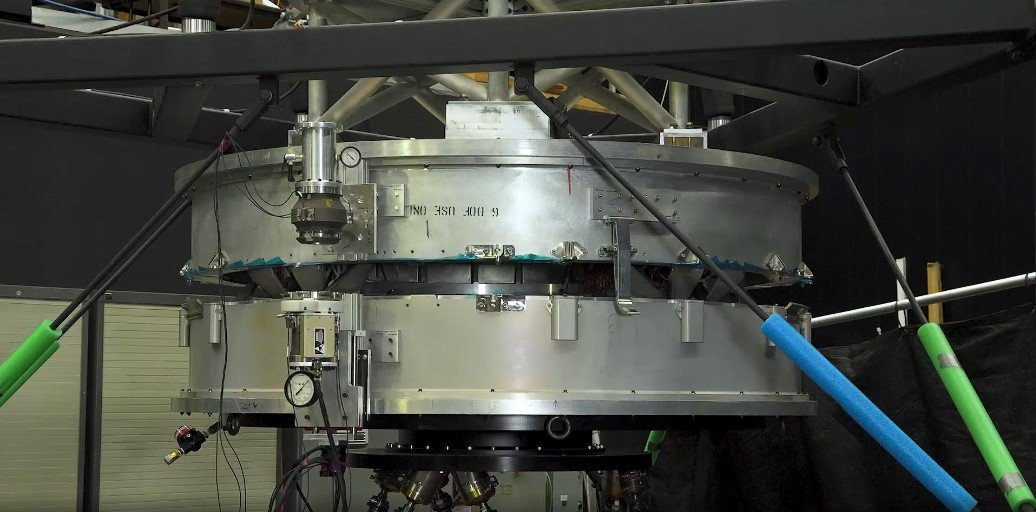
NASA and industry partners have begun testing the cryocoupler at the Marshall Space Flight Center in Huntsville, Alabama. The testing includes two main areas. First, engineers exposed the device to extremely cold conditions by pushing liquid nitrogen through the system in various connected and disconnected configurations. This assessed how the device handles thermal contraction, fluid flow, and large temperature differences between the propellant and its components. Second, they tested operational performance by simulating docking misalignment. One half of the coupler was mounted on a robotic platform capable of movement and rotation, while the other half stayed in a fixed position above the table. This setup checked whether the design can tolerate slight misalignment during real docking scenarios.
Project leadership emphasizes that these are early-stage tests focusing on basic functionality. Future campaigns will tailor tests to specific mission needs and evaluate the cryocoupler under those exact requirements. The development is part of a broader 2022 collaboration framework that enables NASA centers to work with industry partners at no-cost access to facilities, hardware, and software.
.

On 26th June, NASA reported on progress with a new device designed to support refueling in space before deep-space missions. The goal is to enable spacecraft to connect with orbital propellant depots, effectively serving as fueling stations in orbit rather than only on Earth. This approach requires a cryocoupler that can safely transfer ultra-cold liquids in the harsh environment of space.
A key feature is the cryocoupler, a mechanism that allows two spacecraft to connect and transfer cryogenic propellants without losing efficiency. Cryogenic fuels, such as liquid hydrogen and liquid oxygen, must stay extremely cold, well below zero Fahrenheit. This requirement places strict demands on materials, seals, and moving parts to prevent leaks and performance loss during transfer.
Current ground-based fueling gear used for the Space Launch System isn’t suitable for in-space transfers. Those couplers are designed for launch-time use, releasing quickly and needing manual reconnection for each flight. They are also built for a different environment and are larger than what would be practical for refueling an orbiting spacecraft. In contrast, the cryocoupler being developed aims to attach and detach multiple times and to do so automatically, reducing the need for spacewalking astronauts during refueling.
Cryocoupler tests in Alabama
NASA and industry partners have begun testing the cryocoupler at the Marshall Space Flight Center in Huntsville, Alabama. The testing includes two main areas. First, engineers exposed the device to extremely cold conditions by pushing liquid nitrogen through the system in various connected and disconnected configurations. This assessed how the device handles thermal contraction, fluid flow, and large temperature differences between the propellant and its components. Second, they tested operational performance by simulating docking misalignment. One half of the coupler was mounted on a robotic platform capable of movement and rotation, while the other half stayed in a fixed position above the table. This setup checked whether the design can tolerate slight misalignment during real docking scenarios.
Project leadership emphasizes that these are early-stage tests focusing on basic functionality. Future campaigns will tailor tests to specific mission needs and evaluate the cryocoupler under those exact requirements. The development is part of a broader 2022 collaboration framework that enables NASA centers to work with industry partners at no-cost access to facilities, hardware, and software.
.