NASA’s Parker Solar Probe May Have Found the Missing Piece Behind the Sun’s Hottest Mystery
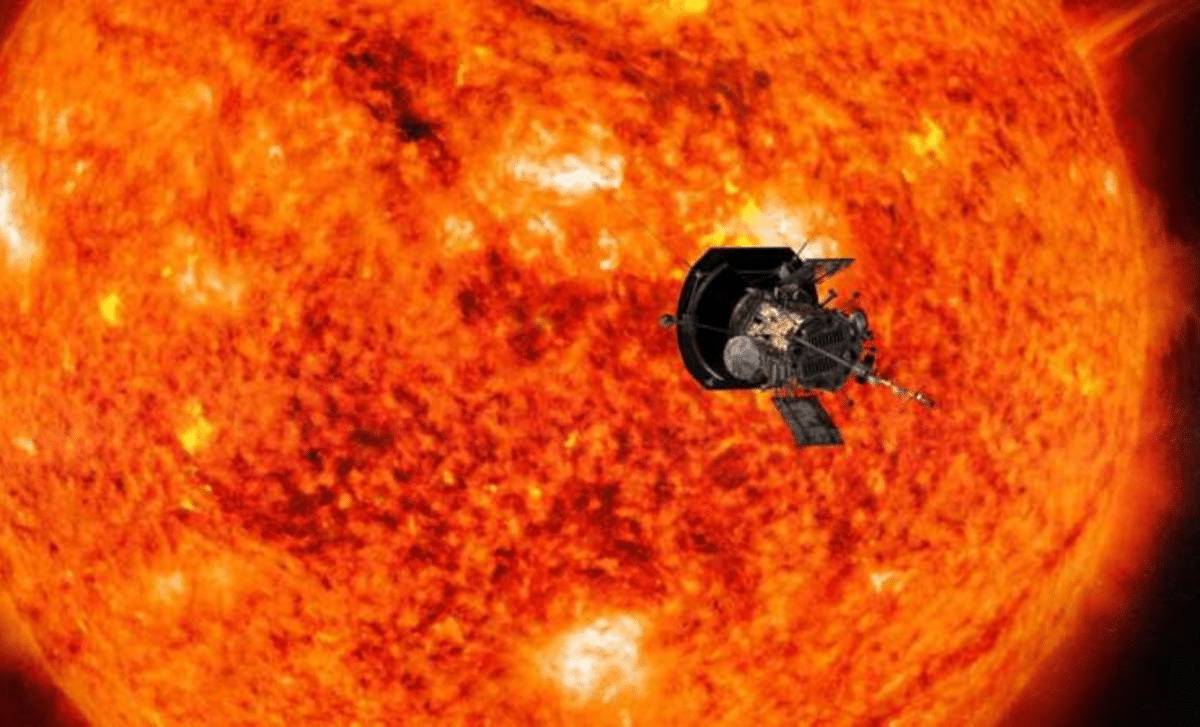
One of the biggest unanswered questions in solar physics may have gained an unexpected new lead. Researchers analyzing observations from NASA‘s Parker Solar Probe have found evidence that tiny charged dust grains close to the Sun could influence how energy travels through the solar corona, potentially helping explain why the corona reaches temperatures of millions of degrees while the solar surface remains far cooler. The findings, published in The Astrophysical Journal, introduce a new factor into decades of research focused almost exclusively on plasma particles and magnetic fields.
Parker Solar Probe Reveals An Unexpected Source Of Solar Activity
For decades, scientists have tried to understand why the Sun’s outer atmosphere reaches temperatures between one and three million degrees Celsius while the visible surface remains around 5,500 degrees Celsius. Traditional explanations have centered on interactions between electrons, ions, magnetic fields, and plasma waves, particularly kinetic Alfvén waves, which transport electromagnetic energy through the corona before transferring it to charged particles. The new research proposes that another participant has been hiding in plain sight. According to lead author Syed Ayaz, a graduate research assistant at The University of Alabama in Huntsville (UAH)‘s Center for Space Plasma and Aeronomic Research (CSPAR), dust grains deserve serious attention.
As Ayaz explains,
“The higher temperature of the sun’s corona remains one of the major unsolved problems in heliophysics. For decades, researchers have focused mainly on how electrons, ions, magnetic fields and plasma waves transport and dissipate energy in the solar atmosphere. Kinetic Alfvén waves are especially important because they can carry electromagnetic energy through the corona and transfer that energy to particles, helping to heat and accelerate the plasma.”
His team’s work expands that framework by considering how charged dust may reshape these energy-transfer processes.

Credit:The Astrophysical Journal
Dust Was Never Expected To Survive This Close To The Sun
One reason dust has rarely appeared in coronal heating models is that scientists assumed it could not exist in such an extreme environment. Temperatures surrounding the Sun should rapidly destroy tiny grains, making them irrelevant to the physics occurring there. Parker Solar Probe changed that assumption during its close solar encounters. Ayaz explains,
“Our work adds a new ingredient to this picture: dust grains. Before the Parker Solar Probe, dust was not usually considered an active part of coronal heating models because dust grains—a million times more massive than electrons/ions—were not expected to survive the high temperature of the solar corona.”
Even more surprising was how the spacecraft detected this dust without carrying a dedicated dust instrument. “What surprised me most was that the PSP could reveal so much about dust, even though it does not carry a dedicated dust detector on board,” Ayaz says. “When tiny dust grains strike the spacecraft at high speed, they vaporize and produce small clouds of charged particles. These impacts appear as sharp voltage spikes in the FIELDS antennas, allowing the whole spacecraft itself to act, in effect, like a dust detector.” Those observations revealed that dust remains active much closer to the Sun than previously believed.

Credit:The Astrophysical Journal
Charged Dust Could Change How Energy Moves Through The Corona
The study, published in The Astrophysical Journal, argues that dust grains are far more than passive debris drifting through the inner solar system. Once electrically charged through interactions with sunlight and surrounding plasma, they become active participants in the Sun’s electromagnetic environment. Ayaz explains, “This matters for solar physics because charged dust grains are not just passive particles. Once dust grains acquire an electric charge through processes such as photoemission and plasma collection, they interact with electric and magnetic fields, influence plasma waves and modify how energy is transported and dissipated.”
The researchers found that dust influences kinetic Alfvén waves in two competing ways. “Our study shows that dust plays two distinct roles in the way energy moves through the sun’s atmosphere,” Ayaz says. “Dust mass acts like an added inertia in the plasma. This tends to slow kinetic Alfvén waves and allows their energy to be carried over larger distances before it is dissipated. Dust charge, on the other hand, strengthens the interaction between the wave, the electric field and charged particles.” These competing mechanisms may determine where energy is ultimately released. “If dust mass dominates, wave energy may travel farther into the corona or young solar wind. If dust charge effects dominate, the energy may be released more locally as particle heating.”
A Discovery That Could Reshape Solar Physics
The findings challenge one of the field’s long-standing assumptions by suggesting that dust should no longer be ignored in models describing the Sun’s atmosphere. “Most models of solar heating and particle acceleration treat the near-sun environment as a plasma made mainly of electrons, ions and magnetic fields,” Ayaz says. “Those ingredients are still essential, but our research shows that charged dust grains also influence the physics in this region.” The implications extend beyond refining existing models. If confirmed through future observations, dust could become a missing component in explaining how the corona reaches extraordinary temperatures and how the young solar wind gains energy as it leaves the Sun.
Researchers See The Beginning Of A New Research Direction
The discovery has attracted strong support from senior scientists involved in the project. Dr. Gary Zank, distinguished professor of space science at UAH and director of CSPAR, believes Parker Solar Probe has opened an entirely new avenue of investigation. “The discovery of dust in the young solar wind by Parker Solar Probe allowed Syed to open up an entirely new and unexpected area of study in solar physics,” Zank says. He adds, “This is very exciting, and Syed realized very quickly that the presence of dust could change how we view the long-standing and open problem of how to heat the solar corona to more than a million degrees. The results he obtained in his preliminary study already suggest that a surprising new paradigm may be emerging. Syed has done outstanding work that will have a significant impact on understanding of the physics of the solar corona.” Future missions equipped with dedicated dust detectors and advanced plasma-wave instruments could determine whether these tiny grains are simply surviving near the Sun or actively helping shape one of the most energetic environments in the solar system.