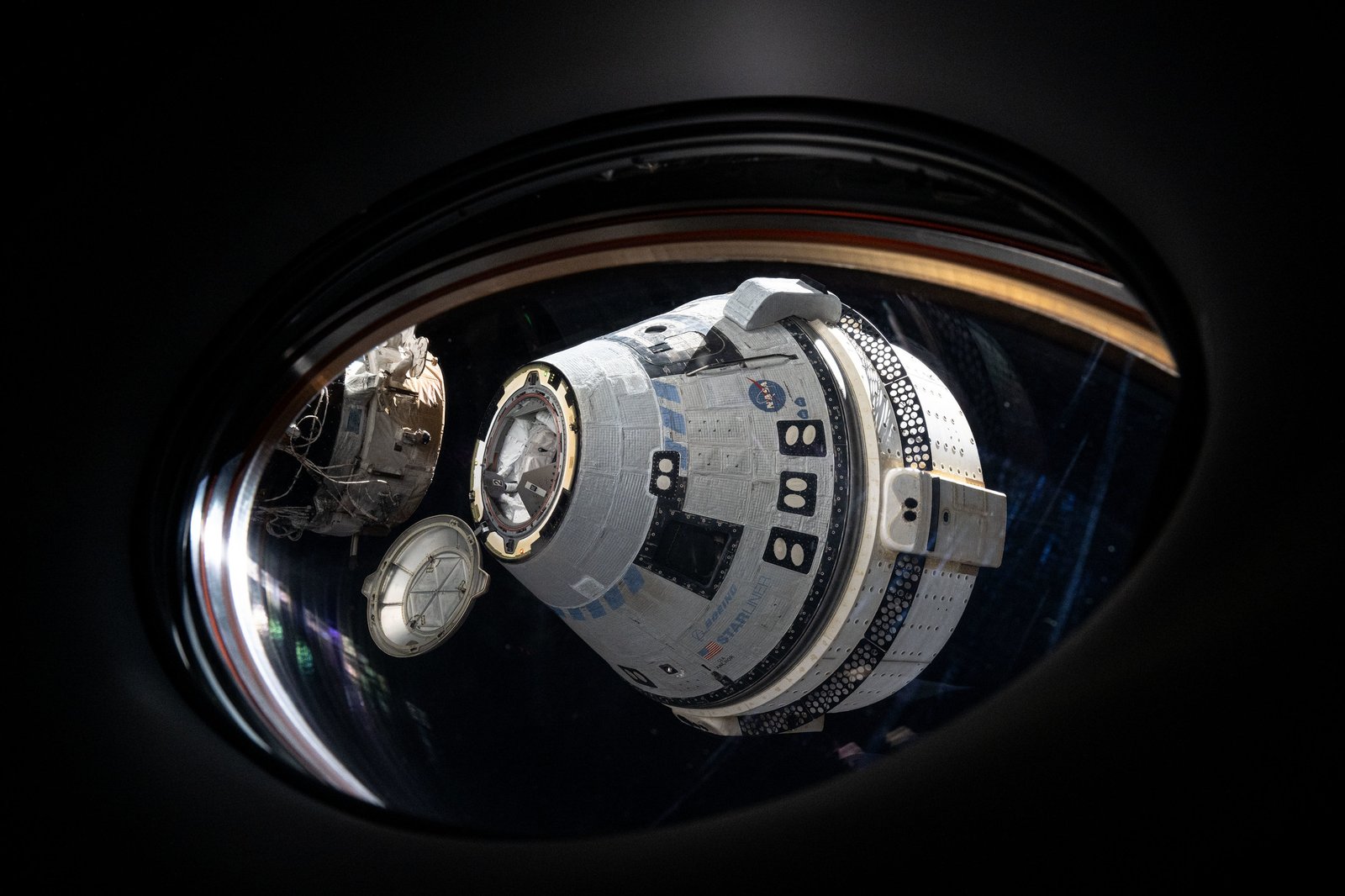
Report links Starliner problems to overconfidence and unrealistic schedules
WASHINGTON — A new report links the long-running technical problems with Boeing’s CST-100 Starliner commercial crew vehicle to a combination of overconfidence, unrealistic schedules and NASA’s lack of insight into the vehicle.
The report by NASA’s Office of Inspector General, released June 30, adds to the uncertainty about when Starliner will be approved for crewed missions to the International Space Station despite optimism from Boeing’s chief executive.
Starliner has not flown since its Crew Flight Test, or CFT, mission two years ago, which suffered thruster malfunctions and other issues that led NASA to return the spacecraft to Earth uncrewed. The NASA astronauts who flew on Starliner to the ISS remained there until March 2025, returning on a Crew Dragon.
The OIG report said the problems with that mission, as well as two previous uncrewed test flights, had three underlying causes.
“NASA was overconfident in Boeing’s design and potential success based on the provider’s use of heritage systems and its long-standing spaceflight experience,” the report stated, noting that NASA allowed Boeing to skip integrated testing of those systems.
“Second, this overconfidence led to Boeing establishing, and NASA accepting, an unrealistic launch and flight-test schedule,” the report said. NASA’s commercial crew program “consistently operated as if Starliner’s CFT mission was only 6 months away” starting in May 2021, although the mission did not ultimately launch until June 2024. Those schedules, the report argued, affected work on vehicle systems and testing.
OIG said the third factor was that NASA lacked access to Starliner flight simulator data. Access to the data was limited by the contract between NASA and Boeing, but OIG said NASA did not take advantage of the data that was available before the CFT mission, including simulation runs that resulted in the loss of vehicle or crew.
“The CFT crew noted this was unlike the shuttle era, when simulation failures resulted in full and open investigations, with reporting to its crews,” the report stated.
Exacerbating those issues is a lack of personnel. The report said that the commercial crew program office lost 21% of its personnel to attrition and reorganizations as of April 2025, and the office was uncertain whether it would be able to continue to access staff in other parts of the agency that it had relied on to help review the safety of vehicles.
OIG noted NASA has taken action to address those issues but criticized the agency for waiting until February, more than a year and a half after the launch of CFT, to formally classify it as a “Type A” mishap. That came only after an independent review recommended that designation, citing technical and organizational problems.
“In our judgment, the 21-month delay in failing to classify the CFT mission as a Type A mishap continues to delay resolution of Starliner issues that have persisted across three flight tests since 2019, further compounding costly delays in obtaining certification and limiting NASA’s options for crew transportation,” the report stated.
Uncertainty versus optimism
The report highlights the uncertainty about when Starliner will fly again and when, or even if, it will be certified for ISS crew rotation missions, given the pending retirement of the ISS in 2030.
“In the near term, given the continued challenges, we have concerns that all three of Boeing’s authorized flights will not be flown by 2030 when NASA plans to decommission the station,” the report stated, referring to the three crewed Starliner flights Boeing is under contract to perform.
Those will come after Starliner-1, originally planned as a crewed flight but converted into a cargo-only mission last year. That mission has not been scheduled, and NASA’s Aerospace Safety Advisory Panel said at a June 22 meeting that Starliner-1 would fly “in the next year or so” without offering a more specific timetable.
That uncertainty contrasts with the optimism Boeing Chief Executive Kelly Ortberg offered about Starliner in an interview with Aviation Week published June 25.
“We’ve made most of the corrective actions that came out of the prior flight test,” he said. “It is still our plan to have additional launches. NASA is working through that schedule. It looks like there might be one launch this year instead of two.”
Early this year, NASA officials left open the possibility of a crewed Starliner mission late this year. That assumed Starliner-1 would make its uncrewed flight as soon as April, allowing the vehicle to be certified for crew in the summer. The release of the independent report in February made it clear that schedule would not hold.
“While NASA officials have noted fall 2026 as the likely time frame for Starliner’s certification, we found this to be unrealistic given the current delays for the Starliner-1 launch and lack of clarity on the progress this uncrewed cargo flight will accomplish on Starliner’s certification plan,” the OIG report stated, concluding certification would likely slip to 2027.
“We think we’ve got a good handle on the thruster problems and corrective actions to fix them,” Ortberg said in the interview, noting he felt more confident about the future of Starliner than a year ago. “We’ve been through exhaustive testing. So I’m more confident that we’ve got our arms around what needs to be done to have a successful program.”
Both the OIG report and the Aerospace Safety Advisory Panel stated that some of the most serious problems from the CFT mission, such as thruster failures and heating of the “doghouses” on the Starliner service module that house the thrusters, had not been resolved.
“A Starliner-1 launch date is not currently scheduled, as NASA continues to evaluate launch opportunities,” the OIG report stated. “However, test results and analysis related to helium leaks and propulsion systems failures have not yet been completed as of March 2026, and NASA is uncertain as to when this testing will be completed or human-rating certification for the Starliner will be obtained.”