Swift Boost mission to launch on Tuesday
Here’s what’s launching June 29–July 5: a Pegasus XL carries a servicing spacecraft to reboost NASA’s Neil Gehrels Swift Observatory and ULA’s Atlas V delivers 29 more Amazon Leo broadband satellites to orbit.
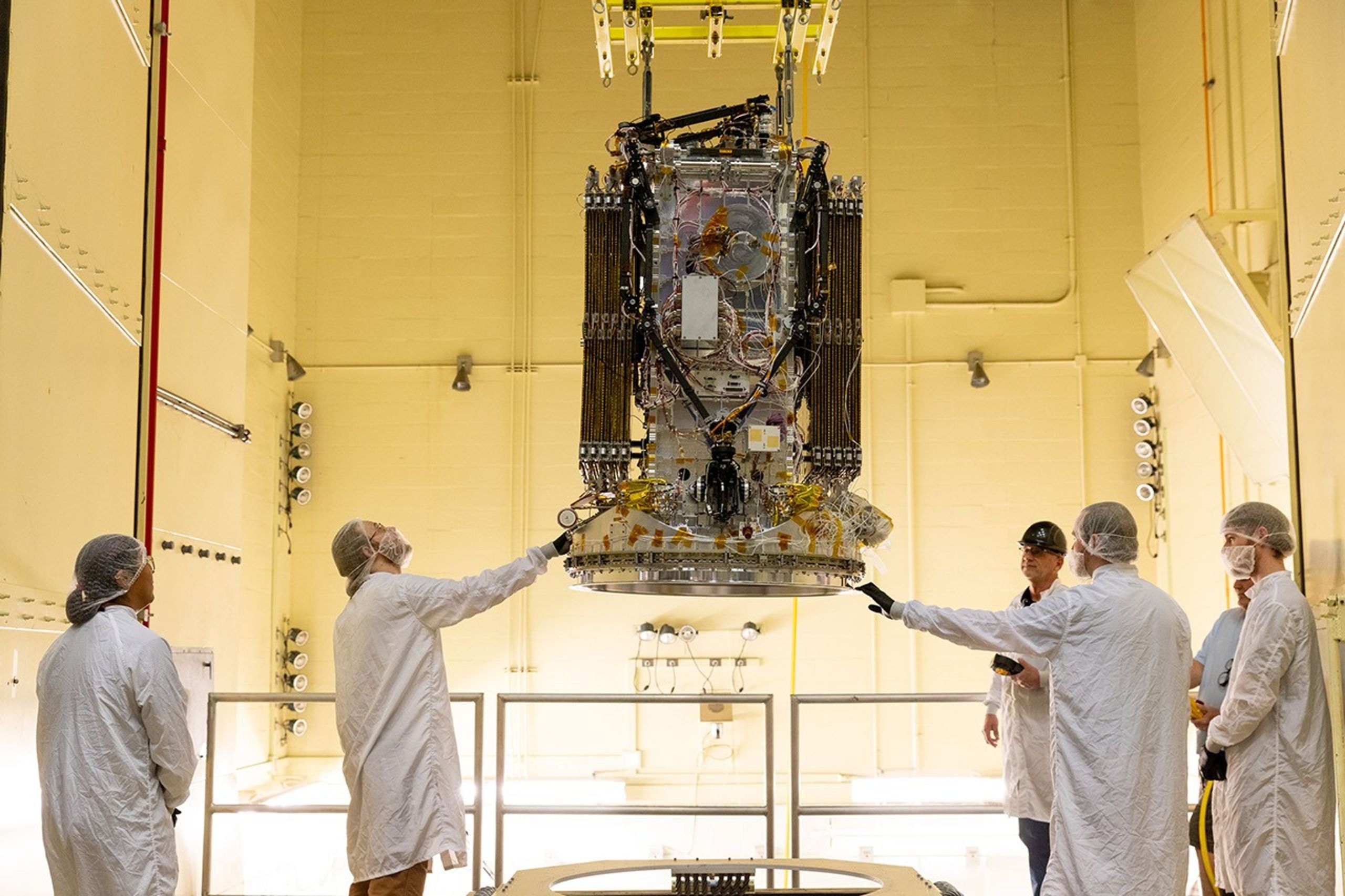
Katalyst Space Technologies engineers stabilize the LINK robotic servicing spacecraft as it enters a vibration chamber at NASA’s Goddard Space Flight Center in Greenbelt, Maryland., on April 15, 2026. The chamber simulated the intense shaking LINK will experience during its upcoming launch. Credit: NASA/Scott Wiessinger
Rocket launches this week
On Tuesday, June 30, Northrop Grumman’s Pegasus XL will air-launch at 6:23 a.m. EDT from the Reagan Test Site in the Marshall Islands for the Swift Boost Mission. The rocket’s payload is the LINK spacecraft, built by Katalyst Space Technologies, which will rendezvous with NASA’s Neil Gehrels Swift Observatory — a gamma-ray telescope whose orbit has been decaying — and boost it to extend the mission’s science life.
South Korea’s Agency for Defense Development (ADD) is targeting no earlier than Tuesday, June 30, for the first orbital launch of its four-stage solid-fuel rocket, lifting off from a barge platform in waters off Jeju Island. The rocket will give South Korea access to orbit for military reconnaissance satellites. The program flew a three-stage version in December 2023, successfully placing a small synthetic aperture radar (SAR) satellite into orbit; Tuesday will be the first flight of the full vehicle.
No earlier than Tuesday, June 30, with a potential launch window opening at 9:00 p.m. EDT, Rocket Lab is planning an Electron launch from Māhia, New Zealand. The mission, “The Grain Goddess Provides,” will deploy the QPS-SAR-13 satellite for Japanese Earth-imaging company iQPS — the eighth Electron launch Rocket Lab has conducted for the constellation and the company’s 13th Electron flight of 2026.
On Wednesday, July 1, China is targeting 7:45 p.m. EDT for a launch from the Jiuquan Satellite Launch Center for an undisclosed payload on a Long March 4C, according to Next Spaceflight. At 10:00 p.m. EDT, SpaceX’s Starlink Group 17-46 mission will launch from Vandenberg Space Force Base. The Falcon 9 booster is expected to land on the droneship Of Course I Still Love You.
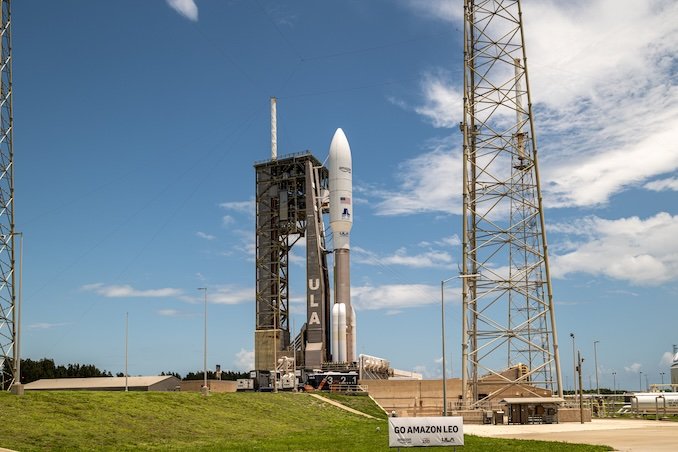
On Thursday, July 2, ULA’s Atlas V 551 lifts off at 12:24 a.m. EDT from Cape Canaveral Space Force Station carrying 29 Amazon Leo satellites. Amazon Leo is the company’s planned broadband constellation of more than 3,200 satellites in low Earth orbit, competing with SpaceX’s Starlink. LA-08 is the program’s eighth Atlas V mission. China also has an undisclosed payload on a Long March 8A from Wenchang at 9:50 a.m. EDT, according to Next Spaceflight.
On Friday, July 3, SpaceX is targeting 7:20 a.m. EDT for Starlink Group 10-50 from Cape Canaveral, with the booster landing on the droneship A Shortfall of Gravitas.
On Saturday, July 5, China closes the week with an undisclosed payload on a Long March 6A from the Taiyuan Satellite Launch Center at 5:31 a.m. EDT, according to Next Spaceflight.
Rocket launches last week
On June 23, SpaceX launched the Starfall Demo from Cape Canaveral — the debut flight of the company’s new uncrewed reentry capsule. According to a May environmental assessment published by the FAA, Starfall is a 4,600-pound (2,086 kg) capsule capable of carrying 2,200 pounds (998 kg) of payload to orbit and back, designed for cargo delivery and commercial in-space manufacturing. SpaceX has been tight-lipped about the specifics — the company cut its webcast after the booster landing without showing the upper stage or payload. SpaceX also launched Starlink Group 17-45 from Vandenberg on June 24, with the booster landing on Of Course I Still Love You.
On June 26, Rocket Lab flew “Ten Owl Of Ten” from Māhia — its 10th mission for Synspective, deploying another StriX SAR imaging satellite for the Japanese company.
The week closed with two launches from SpaceX: Starlink Group 17-40 from Vandenberg on June 28 and SXM-11 from Cape Canaveral on June 28, a new SiriusXM broadcast satellite.
Upcoming rocket launches
China is planning the debut flight for its Long March 10B from Wenchang’s commercial pad on July 10, with daily windows through July 13 according to Next Spaceflight. The two-stage, partially reusable rocket will attempt to recover its first stage at sea. SpaceX also launches Starlink Group 10-42 from Cape Canaveral on July 9 at 5:05 a.m. EDT, and Starlink Group 17-48 from Vandenberg on July 10 at 10:00 a.m. EDT.
Brooks Mendenhall is a staff writer for Astronomy and is based in Chattanooga, Tennessee.
Here’s what’s launching June 29–July 5: a Pegasus XL carries a servicing spacecraft to reboost NASA’s Neil Gehrels Swift Observatory and ULA’s Atlas V delivers 29 more Amazon Leo broadband satellites to orbit.
Katalyst Space Technologies engineers stabilize the LINK robotic servicing spacecraft as it enters a vibration chamber at NASA’s Goddard Space Flight Center in Greenbelt, Maryland., on April 15, 2026. The chamber simulated the intense shaking LINK will experience during its upcoming launch. Credit: NASA/Scott Wiessinger
Rocket launches this week
On Tuesday, June 30, Northrop Grumman’s Pegasus XL will air-launch at 6:23 a.m. EDT from the Reagan Test Site in the Marshall Islands for the Swift Boost Mission. The rocket’s payload is the LINK spacecraft, built by Katalyst Space Technologies, which will rendezvous with NASA’s Neil Gehrels Swift Observatory — a gamma-ray telescope whose orbit has been decaying — and boost it to extend the mission’s science life.
South Korea’s Agency for Defense Development (ADD) is targeting no earlier than Tuesday, June 30, for the first orbital launch of its four-stage solid-fuel rocket, lifting off from a barge platform in waters off Jeju Island. The rocket will give South Korea access to orbit for military reconnaissance satellites. The program flew a three-stage version in December 2023, successfully placing a small synthetic aperture radar (SAR) satellite into orbit; Tuesday will be the first flight of the full vehicle.
No earlier than Tuesday, June 30, with a potential launch window opening at 9:00 p.m. EDT, Rocket Lab is planning an Electron launch from Māhia, New Zealand. The mission, “The Grain Goddess Provides,” will deploy the QPS-SAR-13 satellite for Japanese Earth-imaging company iQPS — the eighth Electron launch Rocket Lab has conducted for the constellation and the company’s 13th Electron flight of 2026.
On Wednesday, July 1, China is targeting 7:45 p.m. EDT for a launch from the Jiuquan Satellite Launch Center for an undisclosed payload on a Long March 4C, according to Next Spaceflight. At 10:00 p.m. EDT, SpaceX’s Starlink Group 17-46 mission will launch from Vandenberg Space Force Base. The Falcon 9 booster is expected to land on the droneship Of Course I Still Love You.
On Thursday, July 2, ULA’s Atlas V 551 lifts off at 12:24 a.m. EDT from Cape Canaveral Space Force Station carrying 29 Amazon Leo satellites. Amazon Leo is the company’s planned broadband constellation of more than 3,200 satellites in low Earth orbit, competing with SpaceX’s Starlink. LA-08 is the program’s eighth Atlas V mission. China also has an undisclosed payload on a Long March 8A from Wenchang at 9:50 a.m. EDT, according to Next Spaceflight.
On Friday, July 3, SpaceX is targeting 7:20 a.m. EDT for Starlink Group 10-50 from Cape Canaveral, with the booster landing on the droneship A Shortfall of Gravitas.
On Saturday, July 5, China closes the week with an undisclosed payload on a Long March 6A from the Taiyuan Satellite Launch Center at 5:31 a.m. EDT, according to Next Spaceflight.
Rocket launches last week
On June 23, SpaceX launched the Starfall Demo from Cape Canaveral — the debut flight of the company’s new uncrewed reentry capsule. According to a May environmental assessment published by the FAA, Starfall is a 4,600-pound (2,086 kg) capsule capable of carrying 2,200 pounds (998 kg) of payload to orbit and back, designed for cargo delivery and commercial in-space manufacturing. SpaceX has been tight-lipped about the specifics — the company cut its webcast after the booster landing without showing the upper stage or payload. SpaceX also launched Starlink Group 17-45 from Vandenberg on June 24, with the booster landing on Of Course I Still Love You.
On June 26, Rocket Lab flew “Ten Owl Of Ten” from Māhia — its 10th mission for Synspective, deploying another StriX SAR imaging satellite for the Japanese company.
The week closed with two launches from SpaceX: Starlink Group 17-40 from Vandenberg on June 28 and SXM-11 from Cape Canaveral on June 28, a new SiriusXM broadcast satellite.
Upcoming rocket launches
China is planning the debut flight for its Long March 10B from Wenchang’s commercial pad on July 10, with daily windows through July 13 according to Next Spaceflight. The two-stage, partially reusable rocket will attempt to recover its first stage at sea. SpaceX also launches Starlink Group 10-42 from Cape Canaveral on July 9 at 5:05 a.m. EDT, and Starlink Group 17-48 from Vandenberg on July 10 at 10:00 a.m. EDT.
Brooks Mendenhall is a staff writer for Astronomy and is based in Chattanooga, Tennessee.